Your Brain Health Is Being Built Earlier Than You Think

A question we get all the time is: When should I start thinking about brain health?
Most people assume it’s when memory starts to slip.
But the reality is, by the time you notice those changes, the biology behind them has been unfolding for years—often decades.
Brain health doesn’t begin at diagnosis. It begins in midlife. A 2026 study published in Neurology brings this into focus. Researchers followed nearly 800 adults starting in their late 30s, measuring vitamin D levels in midlife and then scanning their brains about 16 years later.
What they found adds to a growing body of evidence: the choices we make in our 30s, 40s, and 50s aren’t just about how we feel now—they’re actively shaping the structure and function of the brain later on.
And that’s where this conversation gets interesting.
People with higher vitamin D levels in midlife had lower levels of tau protein later in life. Tau is one of the key proteins linked to Alzheimer’s disease progression. There was no relationship with amyloid, another well-known marker. The signal was selective. It pointed toward tau. This matters because tau is more closely tied to neurodegeneration and cognitive decline than amyloid alone.
The study did not show that vitamin D prevents dementia. It did something more subtle. It showed that a simple blood marker measured in midlife was associated with one of the core biological changes in Alzheimer’s disease nearly two decades later.
What this study highlights is that lifestyle habits in midlife may have a far greater impact on brain health than changes made later in life.
What makes this study especially important
This study is not just about vitamin D. It is highlighting that what is going on in our bodies in midlife, may be a big predictor of what happens in our brains decades later.
Vitamin D levels in this study likely reflected something broader. Sun exposure, movement, metabolic health, and long-term lifestyle patterns.
This is why supplementation studies have been inconsistent. Giving vitamin D later in life does not recreate decades of underlying physiology. The signal appears earlier in the system.
And that aligns with what we now know about Alzheimer’s disease itself.
Brain Changes Start Long Before Symptoms
Multiple large cohort studies now show that Alzheimer’s-related changes begin decades before diagnosis.
Amyloid and tau can accumulate in the brain 15 to 25 years before any noticeable symptoms appear.
One key study from the Alzheimer’s Disease Neuroimaging Initiative (ADNI) and related longitudinal cohorts has shown that tau accumulation in particular tracks more closely with cognitive decline than amyloid buildup.
Another line of research using blood-based biomarkers such as p-tau217 shows that these changes can be detected in midlife and early aging, long before memory loss becomes apparent.
The point is not that disease starts suddenly later in life. It is that the trajectory is already in motion earlier than most people realize.
What This Means For You
This is where the research becomes useful. Midlife is not “too early” for brain health. It may be one of the most important windows. But this does not mean doing more. It means paying attention to patterns that accumulate over time. You do not need a supplement strategy for your brain to benefit. You need repetition. Food patterns that support metabolic health. Regular movement. Time outside. Consistent sleep. Social and cognitive engagement. None of these work instantly. They work cumulatively. That is the part the vitamin D study is really pointing to. Not a single nutrient. A long-term pattern. To learn more, explore our MIND Diet Brain Health Program for a practical, real-world approach to building brain-healthy habits into everyday life.
The Key Takeaway
The most important insight from this research is not about vitamin D. It is about timing. By the time symptoms appear, the biology has often been changing for decades. But that also means midlife is not too late to start brain healthy habits. In fact, midlife choices may make the biggest difference for your overall brain health. And the work is not perfection. It is repetition of the basics over time.
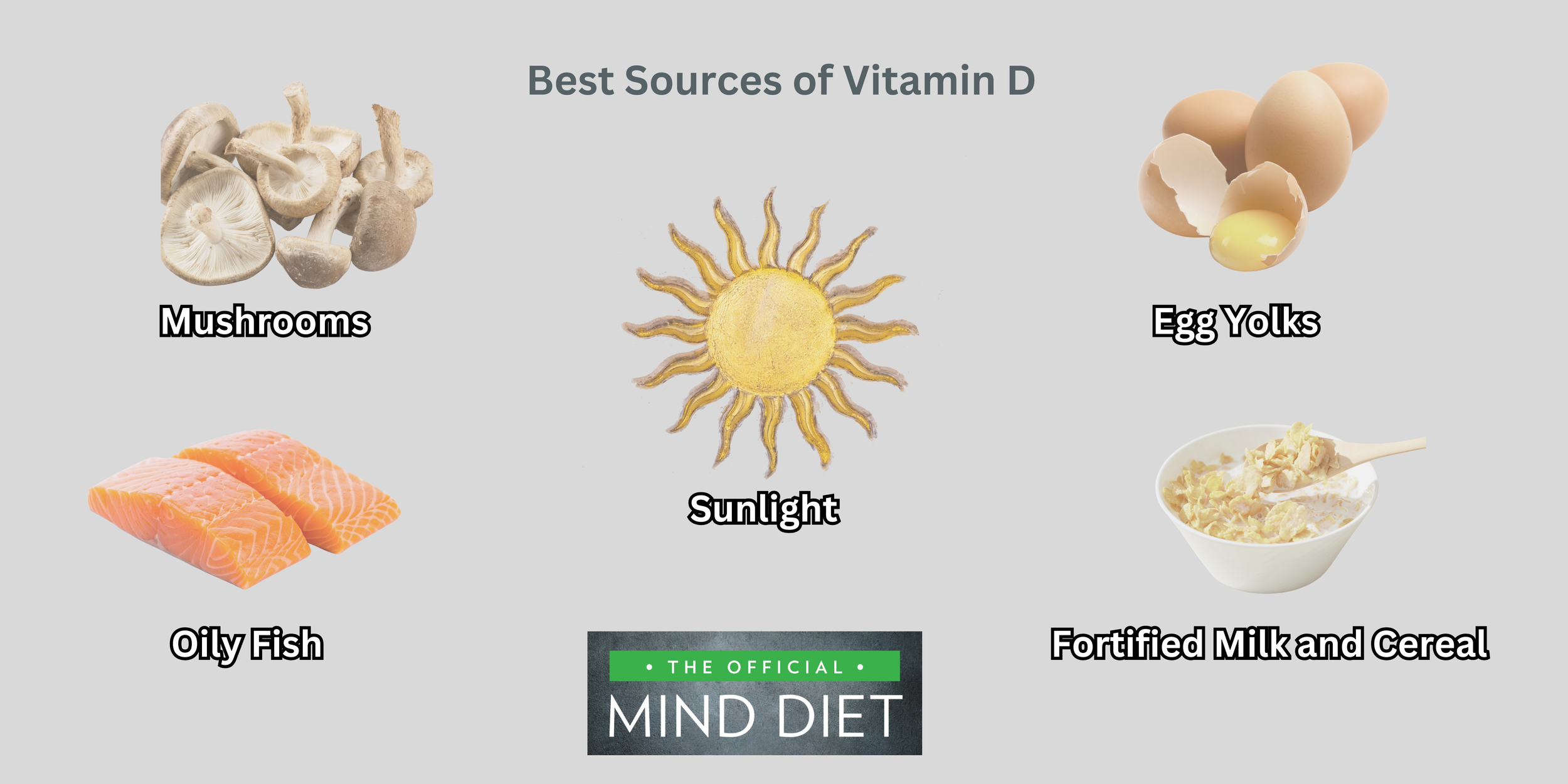
For those looking to support vitamin D levels, here are key sources—including sunlight and food options—that can help naturally maintain healthy levels, especially in midlife brain health.