
Culturally Adapted MIND Diet Contributes to Improved Cognitive Outcomes Across Latin America
As interest in lifestyle approaches to dementia prevention continues to grow, researchers are expanding this work to diverse populations around the world.
A landmark study published in The Lancet evaluated a culturally adapted multidomain lifestyle intervention among 1,065 adults (60–77 years) at increased risk for cognitive decline across 11 Latin American countries. Participants were randomized to either a systematic lifestyle intervention or a flexible health education group and followed for two years.
The Lifestyle Interventions
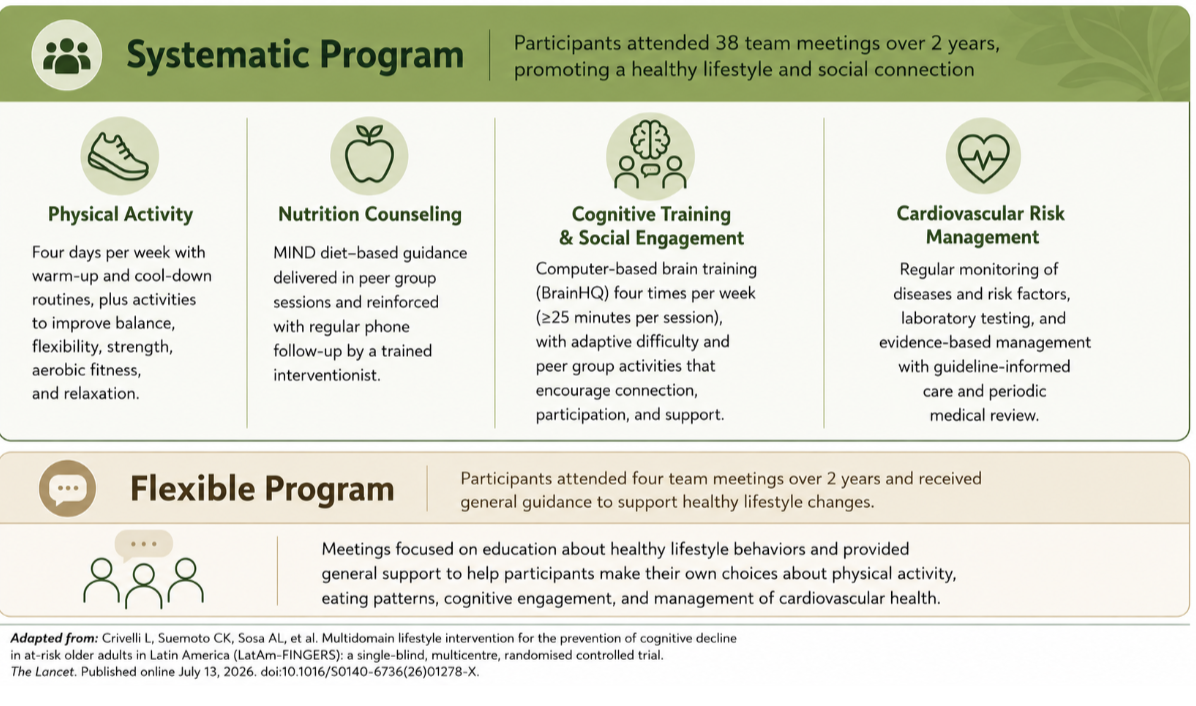
The “systematic” intervention program combined physical activity, nutrition counseling, cognitive training and social engagement, and cardiovascular risk management. Compared with participants in the more flexible program who received general health education, those in the more intensive systematic program experienced significantly greater improvements in global cognition, as well as in each of its key cognitive domains: episodic memory, executive function, and processing speed.
Because the study included people from 11 countries across Latin America with diverse cultures, communities, and lifestyles, it showed that these brain-healthy habits can be successfully adapted across different populations. This is an encouraging step toward making evidence-based dementia prevention more around the world.
What’s Food Got to do With It?
One of the most exciting aspects of the trial was the nutrition component (we admit, we are a bit biased here!). Rather than simply applying the original MIND diet, investigators worked directly with our MIND diet team at Rush University to identify culturally relevant foods that could preserve the diet’s evidence-based nutritional principles, and then created recipes and educational materials to reflect local cuisines and food availability.
This process illustrated one of the central concepts of the MIND diet: it is the overall dietary pattern, not individual foods alone, that matters most. When adaptations preserve the diet's evidence-based nutritional principles, culturally relevant foods can be incorporated while maintaining fidelity to the science.
Building on the Momentum
The LatAm-FINGERS findings build on the momentum of the recently published U.S. POINTER Trial, further strengthening the evidence that multidomain lifestyle interventions can support cognitive health in older adults.
We are grateful to have contributed to the U.S. POINTER study and are encouraged to see the Alzheimer’s Association continuing to advance dementia prevention research through participation in initiatives such as World-Wide FINGERS, bringing evidence-based lifestyle interventions to communities around the globe.
Putting the Research into Practice
One of the core principles of The Official MIND Diet has always been that brain-healthy eating is based on healthy nutrition and lifestyle habits, not single foods, nutrients, or supplements.
Whether you are adapting the MIND diet to fit your culture, your food preferences, or your budget, the goal is the same: creating sustainable habits that support healthy cognitive aging over time.
If you’re just getting started, explore our free MIND Diet on a Budget guide for practical, affordable ways to put these principles into action. If you’re looking for more support, our MIND diet programs and partnerships—including our Your Brain Will Thank You campaign with the Illinois Brain Health Project—offer additional tools and resources to help you turn the science into everyday practice.